
Home / Approach

Advice that can be checked in the field.

Openfarms Lab connects advice to farm context and trusted knowledge, with human judgement where the evidence is uncertain.
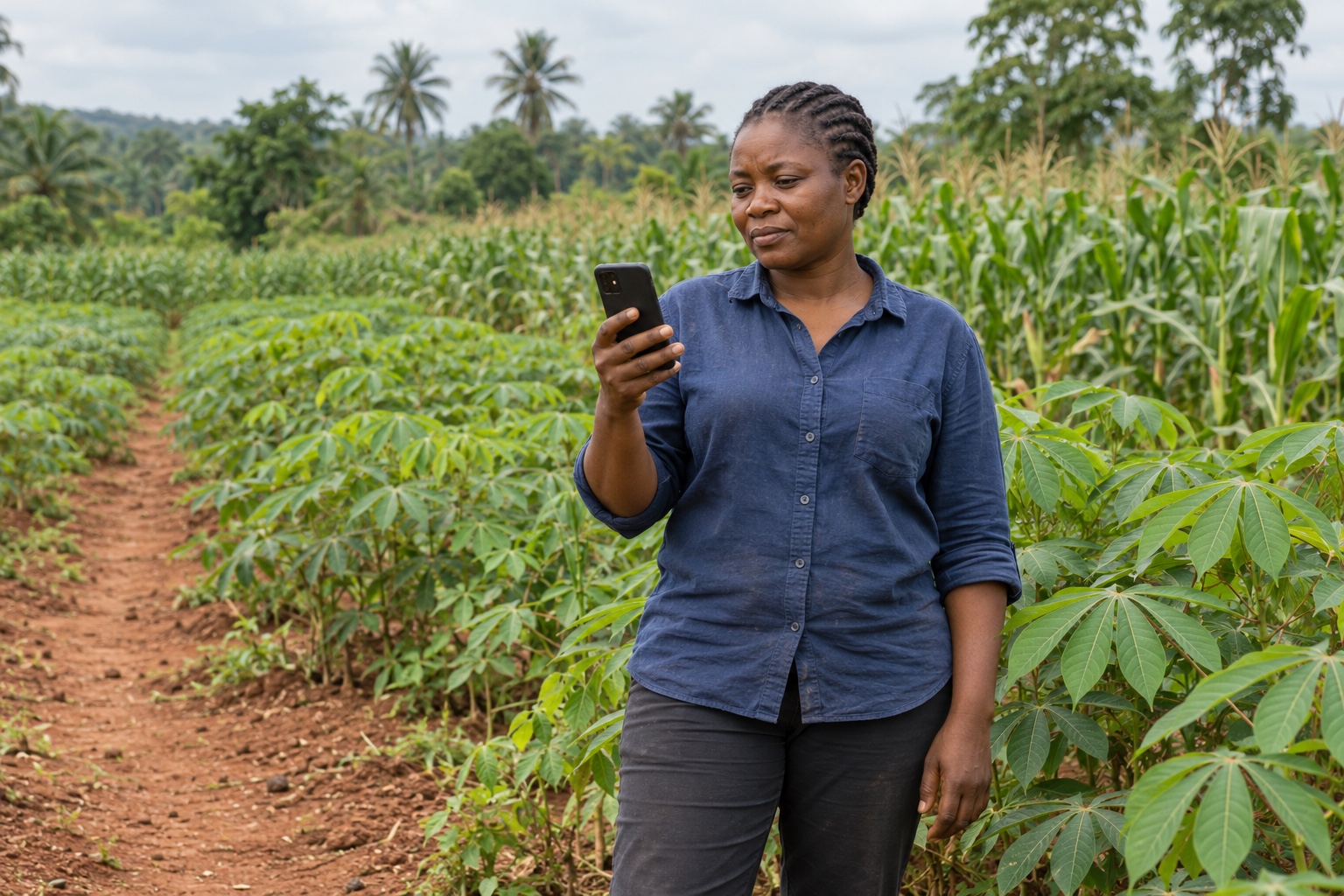
Campaign image: Farmer consulting a phone beside crops

Built to be checked, not just believed.

Agricultural advice carries real consequences. We design advice that can show what it used and where uncertainty remains.

Human oversight

Agronomists, extension workers and inspectors review uncertain assessments. The product supports their judgement. It does not replace it.

Traceable by design

The aim is to connect each result to its farm context and to learn from what happens afterwards.

Calibrated by outcomes

Predicted yield and marketable life are compared with measured results, so recommendations are judged by outcomes rather than by confidence.

  1. 01Farmer
  2. 02Farm & field
  3. 03Season & plan
  4. 04Evidence
  5. 05Batch
  6. 06Outcome
Openfarms Lab does not guarantee yield, replace a qualified agronomist or certify produce as safe for consumption.

The advice loop

Every answer is checked, then checked against what happened.

An answer does not end when it is sent. Where evidence is thin it goes to a person, and what happens in the field is fed back, so confidence is earned rather than assumed.

A farmer asks. Farm context is added. A draft is written with stated confidence. If the evidence is enough the answer is sent with its reasoning; if not, a person reviews or answers. What happens next is recorded, predictions are compared with outcomes, and the result improves later drafts. Farmer asks Question or photo Farm context Crop, season, work done Draft and confidence Says what it is based on Is the evidence enough? Thin Enough A person Reviews or answers Answer sent With its reasoning What happened next Recorded in the field Prediction vs outcome Compared, case by case Better calibrated next time
The feedback loop: connect context, review advice and learn from outcomes.

Calibration

When it says it is sure, it should be right that often.

Calibration compares stated confidence with what actually happened. An overconfident system claims more certainty than the field supports. We want the opposite: confidence that matches the outcomes, so a farmer can tell a solid answer from a cautious one.

  • Predicted yield and marketable life are compared with measured results.
  • Confidence is reported alongside accuracy, never instead of it.
A chart of how often an answer is right against how confident it said it was. The straight dashed line is perfect calibration. An overconfident curve falls below it. A well calibrated curve follows it closely. Stated confidence How often it was right Well calibrated Overconfident Perfect calibration
Example calibration curves compare confidence with outcomes.

What a trustworthy answer should show.

A recommendation is only useful if a farmer or field officer can see what it is based on. Every answer is being designed to carry its own reasoning.

This is an example of the format.

Anatomy of a recommendation

Example
Farm context
Tomato, flowering stage, planted in the early rains. Fertiliser applied two weeks ago.
Observation
Brown spotting on lower leaves, photographed by the farmer.
Likely causes
Two possible conditions, with moderate confidence and the evidence behind each.
Next safe step
Remove badly affected leaves and photograph new growth in two days.
When to ask a person
If spotting spreads to upper leaves, contact a local extension worker before spraying.

Uncertainty, shown honestly

The less sure the evidence, the more the answer says so.

Move the slider to see how the same question is answered as the evidence changes.

A farmer asks about brown spots on the lower leaves of tomatoes. What changes is not the question but how much the answer is willing to claim.

Passed to a person

“I am not sure yet.”

With a blurry photo and no record of when the spots began, the answer does not guess.

  • Asks for what would help: a clearer photo and when the spotting started.
  • Points to a local extension worker before any money is spent on treatment.
Sent with a caution

Two possible conditions.

The answer lists both, says which evidence is missing and keeps its next step small.

  • Shows the evidence behind each possibility, and how confident it is in each.
  • Suggests a safe next step: remove badly affected leaves and photograph new growth in two days.
  • Says when to ask a person: if spotting spreads to upper leaves.
Sent with its reasoning

The most likely cause, and why.

With a clear photo and a recorded season, the answer can show what it used.

  • Starts from the farm context: crop, growth stage, recent work.
  • Names the likely cause, the evidence for it and a stated confidence.
  • Still says when a person should confirm.

What Openfarms Lab will not do.

Being clear about limits is part of being trustworthy. These boundaries guide how the product is designed and described.

Guarantee a yield
Estimates are ranges with stated confidence, never promises.
Replace a qualified agronomist
Agronomists, extension workers and inspectors stay central for uncertain or consequential decisions.
Certify produce as safe to eat
Harvest guidance supports storage decisions. It is not a food-safety certification.
Present a guess as certainty
When evidence is thin, the answer says so and points to human support.

Keep working when the connection doesn’t.

A low-cost Android phone, standing in a field, on an unstable network. Work completed offline stays visible and is retried without creating duplicates.

Pilot locations
Federal Capital Territory, Lagos and Rivers: savanna, coastal and delta conditions.
Supported crops
Cassava, tomato and maize. More are added only after their data and model behaviour are reviewed.

See how it connects

Queue

No connection
  • Leaf photographSaved on phone
  • Harvest batch 04Saved on phone
  • Activity logSaved on phone

When the connection returns, queued work is retried and anything that needs correction is shown.

Example.

Common questions about our approach.

Is the product available to use today?

Not publicly yet. We are testing the AI Extension Worker with farmers and collaborators in Nigeria. There is no public app and no confirmed launch date. Register interest to hear about pilots.

Who reviews uncertain assessments?

Agronomists, extension workers and inspectors. The product is designed to support their judgement and to route uncertain cases to them, not to replace them.

How will you know the advice is working?

By comparing what was predicted with what actually happened in the field. Recommendations are judged by outcomes, and expansion to new crops or features follows that evidence.

Can I use the website chat for advice about my farm?

No. The chat on this website answers questions about Openfarms Lab. For a specific field diagnosis or a high-stakes decision, speak with a qualified local extension worker or agronomist.

Help build work that can be trusted.

Register your interest as a farmer, researcher, partner or sponsor. We would like to understand the perspective you bring.