
Skip to content
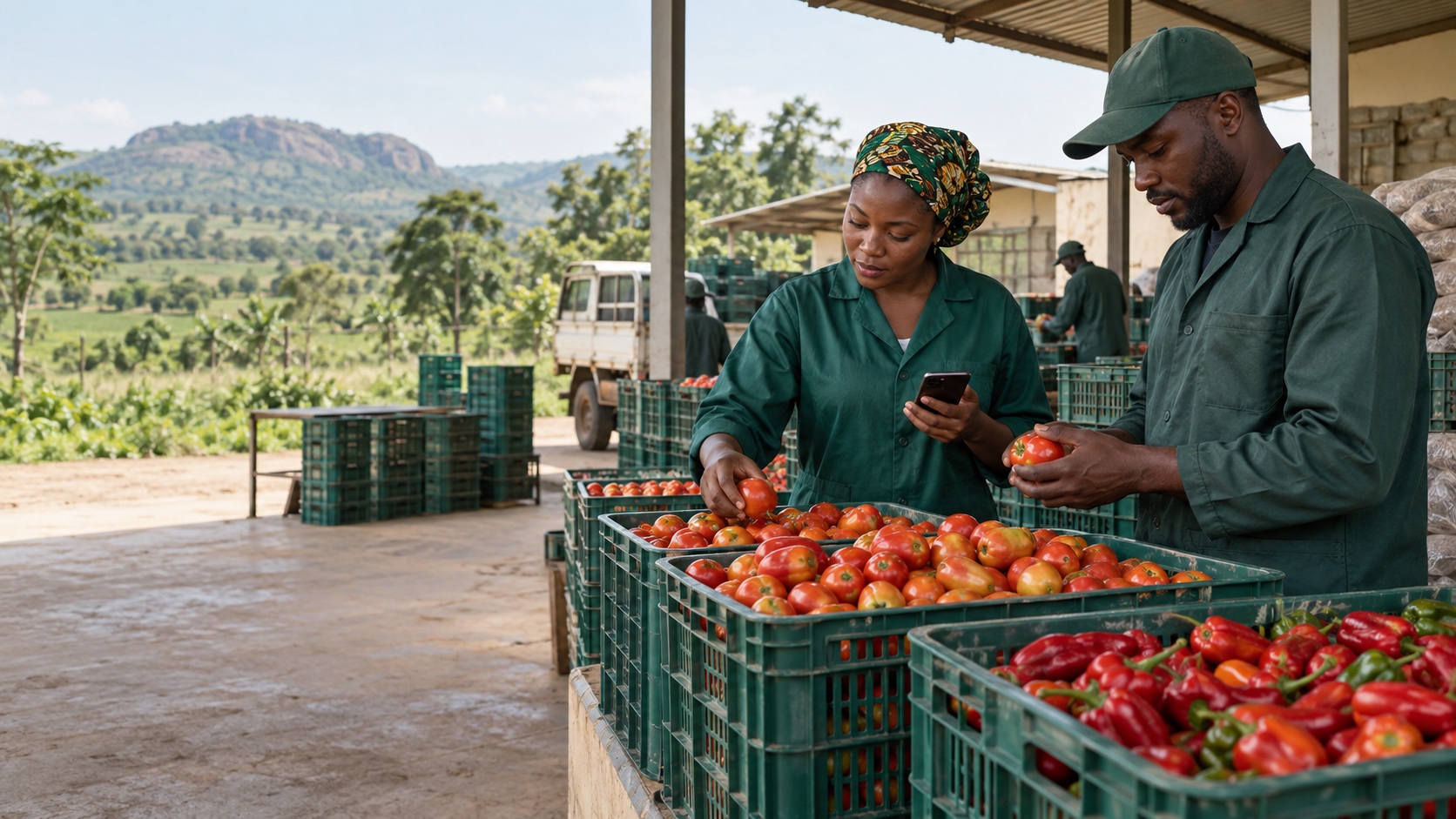
Agricultural professionals inspecting harvested produce at a Nigerian collection point
The platform

A broader platform we have explored.

Our prototype explored how planning, crop protection and harvest records could connect. We are now focused on validating the AI Extension Worker first.

Explore the three engines
These are concepts from our earlier prototype. Our current focus is validating the AI Extension Worker; the three engines are not a fully deployed service.

A connected season, explored in our prototype.

These three engines describe the broader direction our prototype explored. They are not a fully deployed service.

OpenYield · Plan the season

Build a plan grounded in real constraints.

The OpenYield concept would ground a plan in the land, budget, labour, water and inputs a farmer actually has.

  • • A suitable crop and planting window
  • • An attainable yield range, not a single figure
  • • A recommended allocation of your inputs
  • • A versioned plan you can return to

A future version could preserve changes to a plan rather than overwrite its history.

Season plan · Illustrative

Tomato, Field 2

Planting window
Early rains
Yield estimate
A range, with confidence
Inputs
Matched to resources
Plan history
Versioned

OpenGuard · Protect the crop

Respond before a field problem grows.

OpenGuard follows the crop through the season — activities, observations, photographs, weather and cost — and flags the change that matters.

  • • A likely supported pest or disease condition
  • • Confidence, and the evidence behind it
  • • A safe next action, or a route to human support
  • • A plan-review alert when conditions shift

Significant new evidence sends the season plan back to OpenYield for review.

Field observation · Illustrative

A leaf has changed.

Photograph the affected crop. Review the likely condition, supporting evidence and the next safe action.

Evidence shownHuman review when needed

OpenHarvest · Preserve the harvest

Protect harvested value after it leaves the field.

OpenHarvest registers produce as traceable batches and follows each one through storage to its final outcome.

  • • A current quality assessment
  • • An estimated marketable-life range
  • • Storage, temperature and humidity guidance
  • • A digital expiry clock with risk alerts

Harvest batch · Illustrative

Tomato Batch 04

Every batch stays connected to the season that produced it. New observations update the estimate and the next inspection.

Marketable life changes with conditions

An estimate that changes when conditions change.

OpenHarvest does not calculate an expiry date once and forget it. New observations can change the remaining marketable-life range, storage guidance and next inspection.

Illustrative · Initial condition

2–4 days remaining

Condition
Stable
Storage
Shaded and ventilated
Next inspection
Today at 6:00 PM

Illustrative · Temperature rose to 34°C

1–2 days remaining

Condition
Declining
Storage
Move to cooler storage
Next inspection
Today at 2:00 PM

Every decision becomes part of the next decision.

  1. 01 / Establish context

    Start with the farm

    Farm, fields, resources and the current season.

  2. 02 / Plan the season

    Work within real limits

    OpenYield predicts an attainable yield within your limits.

  3. 03 / Record the season

    Capture what happens

    Activities, photographs, observations and costs.

  4. 04 / Adapt the plan

    Review significant change

    Significant change sends the plan back for review.

  5. 05 / Register the harvest

    Follow each batch

    Batches linked to the season that produced them.

  6. 06 / Learn from outcomes

    Use what actually happened

    Actual results compared with what was predicted.

Interested in putting this to work?

Whether you work in the field, in research or with agricultural organizations, tell us where OpenFarms could help.

Register interest